Evaluating Forest Drone Logo Design Assets for Professional and Creative Projects
When embarking on a branding project or a creative endeavor that merges technology with nature, the selection of visual assets is a critical decision point. The concept of a Forest Drone Logo Design represents a specific niche within graphic resources, combining the sleek, mechanical aesthetics of unmanned aerial vehicles with the organic, textured elements of woodland environments. For designers, hobbyists, and business owners aged 20 to 50 who are evaluating their options, understanding the utility, flexibility, and limitations of pre-made design assets versus custom creation is essential. This analysis explores what makes these specific digital graphics valuable, how they compare to other sourcing methods, and where they fit best in a broader creative workflow.
Defining the Aesthetic and Utility of Forest Drone Graphics
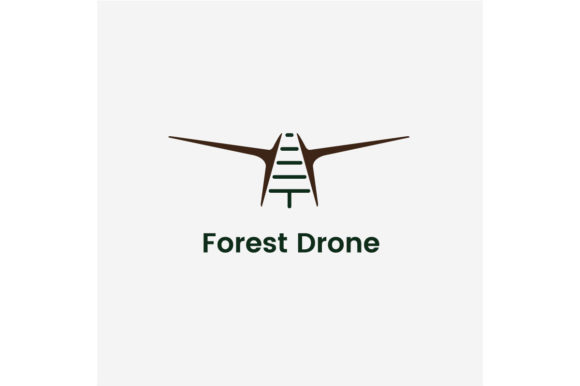
A Forest Drone Logo Design typically features a juxtaposition of two distinct worlds: the high-tech precision of drone hardware and the rugged, natural beauty of a forest. This might manifest as a drone silhouette integrated with pine trees, leaf patterns forming the shape of a propeller, or earth-tone color palettes applied to geometric tech icons. The distinctiveness of this style lies in its ability to communicate dual values—innovation and environmental stewardship—which is increasingly relevant for companies in agriculture, conservation, eco-tourism, and outdoor photography.
When you acquire a digital package for such a design, you are not just buying a static image; you are investing in a versatile toolkit. A comprehensive file set usually includes an SVG file, an EPS file compatible with Adobe Illustrator (often saved as version 10 for maximum compatibility), a high-resolution JPG at 300dpi, and a PNG with a transparent background also at 300dpi. This variety ensures that the asset can be deployed across vastly different mediums without losing fidelity. The presence of vector formats like SVG and EPS is particularly crucial, as it allows the design to be scaled infinitely—from a small favicon on a website to a large-format vinyl wrap on a vehicle—without pixelation.
Comparing Pre-Made Assets to Custom Design Solutions
One of the primary decisions a creator faces is whether to utilize a pre-existing Forest Drone Logo Design template or to commission a custom illustration from scratch. Both approaches have merit, but they serve different needs and budgets.
Pre-made digital assets offer immediate availability and cost-effectiveness. For startups operating on lean budgets, freelancers needing quick turnaround times, or individuals creating handmade crafts, downloading a ready-to-use zip file eliminates the weeks-long process of briefing, sketching, and revising with a professional designer. The trade-off, however, is exclusivity. Since these files are often available for purchase by multiple users, there is a possibility that another entity could use a similar design. For a local hobbyist group or a one-off event invitation, this is rarely an issue. However, for a corporation seeking a unique trademark, this lack of exclusivity is a significant limitation.
In contrast, custom design services provide a bespoke identity tailored specifically to a brand's narrative. A human designer can interpret nuanced requirements that a template cannot, such as incorporating a specific species of tree native to a region or matching exact corporate colors. Yet, this comes with higher costs and longer timelines. For many users, especially those in the "maker" community or small business sector, the middle ground offered by editable templates is the most practical solution. By purchasing a high-quality EPS or SVG file, a user retains the ability to modify colors, swap out specific elements, or combine the drone graphic with unique typography, thereby creating a semi-custom result that balances efficiency with individuality.
Versatility Across Digital and Physical Mediums
The true value of a robust Forest Drone Logo Design package is revealed in its application across various formats. The inclusion of both raster (JPG, PNG) and vector (SVG, EPS) files caters to a wide spectrum of use cases, ranging from digital interfaces to tangible products.
In the realm of graphic and web design, the SVG and PNG files are indispensable. Web developers prefer SVGs for their small file size and crisp rendering on high-DPI screens, while the transparent PNG is ideal for overlaying the logo onto varied website backgrounds or social media banners. The 300dpi resolution of the raster files ensures that even when used in digital presentations or online catalogs, the imagery remains sharp and professional.
Beyond the screen, these assets excel in physical production. The high-resolution JPG and EPS files are perfectly suited for printed paper items, such as business cards, brochures, and stationery. For those involved in handmade craft items, the vector files can be imported into cutting machine software to create precise stencils, decals, or iron-on transfers. Imagine creating custom invitations for an outdoor-themed party or announcements for a drone racing event; the ability to scale the graphic without quality loss allows for creativity on materials ranging from cardstock to fabric.
Furthermore, the adaptability extends to wall art and decor. A designer can take the core forest drone element, adjust the color palette to match a room's interior, and print it as a large canvas or framed poster. This flexibility makes the asset useful not just for branding, but for personal expression and interior design projects.
Technical Considerations and File Compatibility
When evaluating a download package, technical specifications are paramount. The mention of Adobe Illustrator saved as version 10 is a strategic detail for compatibility. While modern software versions are powerful, many professional print shops and legacy systems still rely on older, stable versions of Illustrator. An EPS file saved in this format ensures that the vector paths remain editable and intact across a decade's worth of software iterations, reducing the risk of corruption or incompatibility errors during the production phase.
The distinction between the file types also dictates the workflow. If the goal is web design, the SVG is the primary tool, offering code-based scalability. If the project involves large format printing for party decor or signage, the EPS or high-res PDF derived from it is the standard. Understanding these differences helps users avoid common pitfalls, such as attempting to enlarge a low-resolution JPG for a billboard, which would result in a blurry, unprofessional outcome. A well-structured zip file containing all these variations empowers the user to choose the right tool for the specific job at hand.
Decision Factors: When to Choose This Approach
Determining whether a Forest Drone Logo Design asset is the right choice depends on several factors: budget, timeline, need for exclusivity, and technical capability.
- Budget Constraints: If funds are limited, purchasing a digital graphic element is significantly more affordable than hiring a design agency.
- Timeline Urgency: For projects with tight deadlines, such as last-minute event invitations or a sudden need for marketing materials, ready-made assets provide an instant solution.
- DIY Capability: Users comfortable with basic editing software can leverage these files to create professional-looking results without outsourcing.
- Scope of Use: If the design is for internal use, a specific event, or a small-scale product line, the non-exclusive nature of stock graphics is generally acceptable.
However, if the objective is to build a global brand with a legally protectable trademark, relying solely on a stock template may be insufficient. In such cases, the Forest Drone Logo Design can serve as an excellent starting point or inspiration. A professional designer can use the purchased vector file as a base, heavily modifying it to create a unique derivative work that satisfies legal requirements for originality.
Maximizing Value Through Strategic Adaptation
To get the most out of these digital resources, users should think beyond the default presentation. The strength of having an editable SVG or EPS lies in the ability to customize. Changing the color scheme from a standard green and grey to a vibrant orange and black can completely alter the mood of the design, making it suitable for emergency response drones rather than ecological surveying. Adding texture overlays in post-production can give the clean vector lines a rugged, distressed look appropriate for vintage-style stationery or handmade cards.
Ultimately, the Forest Drone Logo Design represents a convergence of nature and technology, packaged in a format that prioritizes accessibility and versatility. Whether utilized for creating eye-catching wall art, professional stationery, or the foundational identity of a new tech venture, these assets offer a pragmatic balance between quality and convenience. By understanding the technical strengths of the included file formats and realistically assessing the project's needs regarding exclusivity and customization, creators can make informed decisions that elevate their work without unnecessary expenditure or delay.