The Art of Organized Eating: Unlocking the Potential of Meal Planning Templates
In the fast-paced rhythm of modern life, the question "What's for dinner?" often triggers more stress than satisfaction. Between demanding work schedules, family commitments, and the desire to maintain a healthy lifestyle, meal planning has emerged as a critical skill for personal well-being and household efficiency. However, starting from a blank page can be daunting. This is where structured resources, such as the Meal Planning Basics Templates Bundle and specialized onboarding vector templates, transform a chaotic chore into a streamlined, creative process.
Understanding the fundamentals of meal planning is not just about listing groceries; it is about designing a lifestyle that supports health, saves money, and reduces decision fatigue. Whether you are a nutritionist building an app, a blogger creating content, or an individual seeking order in your kitchen, grasping the visual and structural elements of planning is essential.
Why Structure Matters in Nutrition and Design
At its core, meal planning is a logistical exercise with profound health implications. When we approach food without a plan, we are prone to impulsive decisions that often favor convenience over nutrition. A well-structured plan acts as a roadmap, guiding daily choices toward balanced macros and diverse micronutrients.
From a design perspective, the way this information is presented matters immensely. This is where the concept of a Healthy Menu Plan Color Concept comes into play. Visual cues influence behavior. Using fresh greens, vibrant oranges, and clean whites in linear illustrations does more than look appealing; it psychologically associates the planning process with freshness and vitality. When users interact with a responsive mobile website featuring these elements, the experience feels intuitive and encouraging rather than clinical or restrictive.
Many people misunderstand meal planning as a rigid constraint. In reality, effective templates provide a flexible framework. They allow for spontaneity within boundaries, ensuring that while the structure remains, the content can adapt to seasonal produce or sudden cravings. This balance is crucial for long-term adherence to healthy eating habits.
The Role of Vector Templates in Modern Workflow
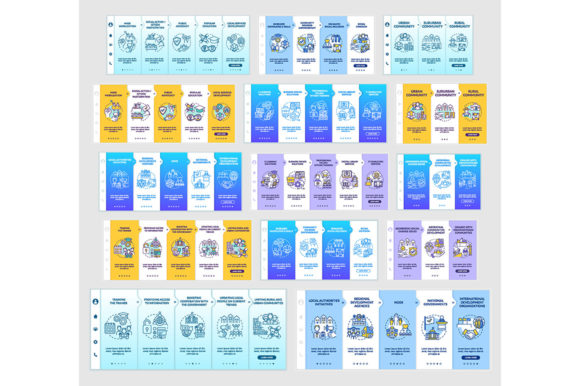
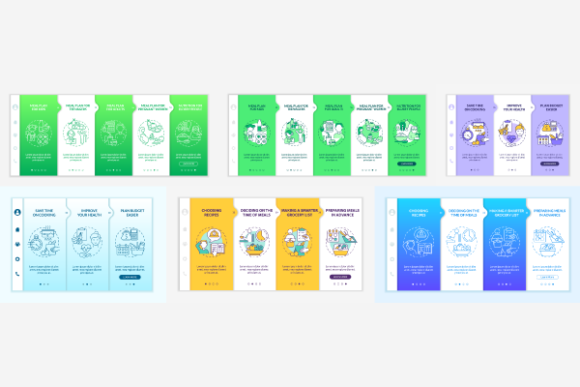
For creators, educators, and business owners, the ability to communicate these concepts quickly is vital. This is where the Meal planning basics onboarding vector templates bundle becomes an invaluable asset. These collections are not merely static images; they are comprehensive toolkits designed to accelerate the creation of educational materials, mobile applications, and marketing brochures.
Consider the time saved by having pre-designed infographic elements and mobile app screen pages. Instead of spending hours sketching layouts or searching for disjointed icons, professionals can utilize a cohesive set of assets that share a unified aesthetic. This consistency builds trust with the audience. When a user sees a seamless transition from an onboarding screen to a weekly planner, the perceived quality of the service increases significantly.
Furthermore, the versatility of file formats ensures compatibility across various platforms. Whether you need high-resolution JPEG files for social media posts, scalable SVG or EPS vectors for print brochures, or editable AI files for custom modifications, a robust bundle covers all bases. This adaptability is key in a multi-channel digital environment where content must look crisp on both a smartphone screen and a large format poster.
A Walkthrough: The 4-Step Onboarding Experience
To truly appreciate the utility of these templates, let us explore how they facilitate a user journey through a hypothetical mobile application. A successful onboarding process guides the user from confusion to confidence in four distinct steps. This narrative arc is often visualized using linear illustrations that depict progress and clarity.
-
Step One: Assessment and Goals
-
Step Two: The Framework Setup
Once goals are set, the user is introduced to the planning structure. This screen utilizes the Meal Planning Basics Templates to show a weekly grid. Here, the design emphasizes simplicity. Drag-and-drop elements or clear input fields are highlighted. The illustration might show a calendar filling up with colorful food icons, symbolizing the ease of organization. This step demystifies the planning process, showing users that it is manageable. -
Step Three: Smart Selection and Customization
-
Step Four: Execution and Tracking
This four-step walkthrough illustrates how onboarding vector templates do more than just fill space; they tell a story. They guide the cognitive load of the user, breaking down a complex task into digestible, actionable segments. For developers and designers, having these screens pre-mapped out allows for rapid prototyping and testing, ensuring the final product is user-centric.
Broadening the Scope: Beyond the Kitchen
While the primary application of these templates is culinary, the principles extend far beyond food. The logic of assessment, framework setup, selection, and execution is universal. It applies to project management, educational curriculum planning, and even financial budgeting. By mastering the use of these brochure templates and infographic elements, professionals in various sectors can learn to communicate complex workflows clearly.
For instance, an educator might use the same linear illustration style to teach students about time management. A corporate trainer could adapt the color concepts to create engaging materials for wellness programs. The underlying architecture of the Meal Planning Basics Templates Bundle provides a foundational grammar of design that is adaptable to numerous contexts. This cross-disciplinary utility makes such collections a wise investment for creative portfolios.
Key Takeaway: The value of these resources lies not just in the aesthetic appeal of the linear illustrations, but in the psychological structure they provide. They turn abstract goals into concrete actions, making the path to success visible and attainable.
Quality and Variety: The BSD Studio Advantage
In the vast ocean of digital assets, finding high-quality, cohesive resources can be challenging. Many free templates lack the polish required for professional use, while others are too niche to be versatile. This is where providers like BSD Studio distinguish themselves. By offering a variety of products, topics, and file types, they ensure that there is always something new to discover.
The commitment to quality is evident in the attention to detail found in these bundles. From the precision of the vector paths to the thoughtful selection of the healthy menu plan color concept, every element is crafted to meet professional standards. Whether you are looking for specific icons to点缀 a presentation or a full suite of mobile app screen pages for a startup, the availability of multiple file formats (JPEG, AI, PNG, EPS, SVG) guarantees that you can integrate these assets seamlessly into your workflow.
Moreover, the continuous expansion of their library means that users are not stuck with outdated designs. As trends in UI/UX evolve, so do the templates. This dynamic approach ensures that your projects remain fresh and relevant. Saving time on design work does not mean compromising on quality; rather, it means leveraging expert craftsmanship to elevate your own output.
Building a Broader Understanding
Ultimately, engaging with resources like the Meal planning basics onboarding vector templates bundle is an exercise in efficiency and clarity. It teaches us that good design is invisible—it works so well that the user focuses entirely on the task at hand. For the general reader, understanding this connection between visual tools and behavioral outcomes offers a new perspective on how we interact with technology and information.
Whether you are designing the next big health app or simply trying to organize your family's dinners, the principles remain the same: start with a clear goal, use the right tools to build a structure, customize it to your needs, and execute with confidence. By utilizing high-quality templates, you free up mental energy to focus on what truly matters—creating healthy habits and enjoying the process.
As we navigate an increasingly complex world, the ability to simplify and organize is a superpower. Tools that facilitate this, such as comprehensive template bundles, are not just shortcuts; they are enablers of a better, more organized life. Explore the possibilities, find what you need in the shop, and transform the way you plan, design, and live.
Remember, the journey to better health and efficient design starts with a single step—or in this case, a single template. Embrace the structure, enjoy the creativity, and let these resources guide you toward your goals.