Integrating 28 Spaced Out Paisley Metallic Designs into Professional Creative Workflows
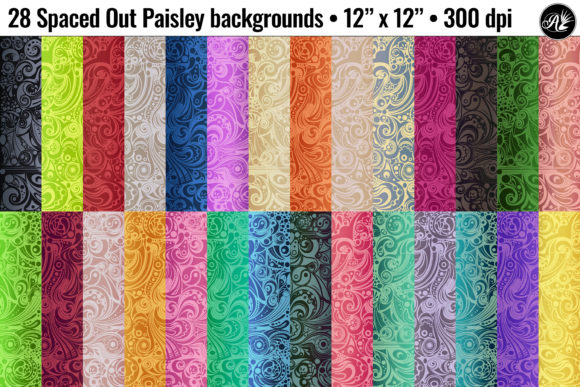
In the landscape of digital design and content creation, the selection of background assets is often a decision made in the final moments of a project. However, for professionals who prioritize efficiency and visual consistency, choosing the right foundational elements is a strategic step that occurs during the planning phase. The 28 Spaced out Paisley Metallic Designs collection represents more than just a set of decorative images; it is a versatile resource designed to integrate seamlessly into various stages of a creative workflow. This modern take on a classic paisley look combines traditional swirls with cosmic energy, offering a unique aesthetic that bridges the gap between retro charm and contemporary digital needs.
Understanding how to deploy these assets effectively requires a shift in perspective from viewing them as mere decorations to treating them as functional components of a larger design system. Whether you are a marketer building a brand identity, an educator creating engaging learning materials, or a small business owner designing invitations, the process of incorporating these designs involves careful consideration of resolution, compatibility, and application context.
Strategic Selection and Pre-Production Planning
The utility of the 28 Spaced out Paisley Metallic Designs begins before any software is opened. With 28 distinct color options, this collection allows creators to align visual assets with specific brand palettes or thematic requirements early in the project lifecycle. Instead of scrambling to find a background that matches a client's hex codes during the execution phase, a planner can review the available colorways during the discovery stage. This proactive approach reduces revision time and ensures that the "far-out creative fun" described in the product details serves a deliberate purpose rather than acting as an afterthought.
For entrepreneurs and freelancers managing multiple clients, organization is key. Upon downloading the zip file, the immediate workflow step should be asset management. Since the files are delivered in a compressed format, users must ensure they have the necessary tools, such as Winzip or 7-Zip, to extract the contents efficiently. Once extracted, the 28 JPG images should be cataloged in a digital asset management (DAM) system or a structured folder hierarchy. Naming conventions should reflect the specific color variations to allow for rapid retrieval. This preparation phase is critical for maintaining momentum when deadlines approach.
Technical Specifications and Quality Control
A robust workflow relies on high-quality inputs. Each image in this collection is sized at 12 x 12 inches with a resolution of 300 DPI and dimensions of 3600 pixels square. These specifications are not arbitrary; they dictate where and how the designs can be used without compromising quality. For print-based projects, such as handmade cards, announcements, or decor items printed on card stock, the 300 DPI resolution ensures crisp lines and clear metallic effects. Attempting to use lower-resolution web graphics for print would result in pixelation, undermining the professional finish of the final product.
Conversely, for digital-only applications like web design or social media graphics, these high-resolution files offer flexibility. They can be scaled down significantly without loss of detail, allowing for sharp visuals on high-density retina displays. However, users must be mindful of file size. Large 3600-pixel images can slow down website loading times if not optimized. A standard part of the digital workflow should include resizing and compressing these assets using tools like Photoshop, Gimp, or online optimizers before deploying them to a live environment.
Integration Across Different Creative Mediums
The versatility of the Spaced out Paisley pattern lies in its ability to function across diverse mediums. The design features swirls, swishes, circles, dots, waves, and lines that add excitement and movement. This complexity makes it an excellent candidate for layering techniques in photo editing software.
- Digital Scrapbooking: Use the backgrounds as the base layer for memory keeping. The non-seamless but tileable nature of the edges allows for creative cropping and framing without worrying about perfect repetition.
- Web Design: Implement specific color variants as section dividers or hero background overlays. Using CSS opacity controls, designers can mute the metallic intensity to ensure text readability while maintaining visual interest.
- Print Marketing: Leverage the 12x12 format for square-format social media posts or convert them for standard flyer layouts. The metallic aesthetic pairs well with minimalist typography, creating a balance between ornate and modern.
- Educational Materials: Educators can use these engaging backgrounds to create certificates, award ribbons, or presentation slides that capture student attention without being overly distracting.
It is important to note that while these designs are not exactly seamless, they possess clear edges that facilitate tiling. This characteristic invites a specific type of implementation strategy. Rather than attempting to force a seamless repeat which might reveal visible seams, creators can use the tiles to create intentional borders or mosaic-style layouts. This approach turns a potential limitation into a stylistic choice, adding structure to the cosmic energy of the design.
Software Compatibility and Execution
To fully leverage the potential of these 28 designs, familiarity with image editing software is essential. The workflow typically involves opening the JPG files in applications like Adobe Photoshop, Photoshop Elements, or the open-source alternative, Gimp. These platforms allow for advanced manipulation, such as adjusting hue and saturation to fine-tune the metallic tones or applying blending modes to integrate the background with foreground elements.
For users who prefer mobile workflows, it is crucial to remember the product requirement: files should be downloaded to a computer, not directly to a phone or tablet. While mobile apps are powerful, the initial organization and heavy lifting of file management are best handled on a desktop or laptop. Once the files are organized and potentially pre-processed on the computer, they can be transferred to mobile devices for on-the-go editing or sharing. This hybrid approach maximizes the strengths of both desktop precision and mobile convenience.
Long-Term Utility and Asset Management
Investing in a comprehensive pack like the 28 Spaced out Paisley Metallic Designs pays dividends over time. Unlike single-image purchases, a collection of this size provides a library of options that can grow with a business or hobby. As trends shift, different colorways within the pack may become more relevant. Having immediate access to 28 variations means a creator can pivot their visual strategy without incurring new costs or searching for new assets.
Maintenance of these digital assets involves regular backups. Since the product photos displayed in listings are for display purposes only and not included in the download, the actual value lies entirely in the 28 JPG files received. Losing these files due to hardware failure would disrupt future projects. Therefore, integrating these downloads into a cloud backup strategy or an external hard drive rotation is a necessary step in the post-purchase process.
Furthermore, consistency in usage builds brand recognition. If a small business owner selects three specific color variations from the set to represent different service tiers, using those same backgrounds consistently across invoices, websites, and physical brochures creates a cohesive brand experience. The "cosmic energy" of the design becomes associated with the brand itself, transforming a generic pattern into a proprietary visual asset.
Final Thoughts on Workflow Efficiency
The successful integration of 28 Spaced out Paisley Metallic Designs into a professional routine hinges on preparation and technical awareness. By respecting the file formats, understanding the resolution capabilities, and planning the color usage ahead of time, creators can streamline their production processes. Whether the goal is to produce a batch of handmade invitations or to refresh a website's aesthetic, these designs offer a robust foundation. The key is to treat them not as static images, but as dynamic tools that, when managed correctly, enhance productivity and elevate the quality of the final output. Through careful planning and execution, the swirls and waves of this collection can drive the visual narrative of any project forward with clarity and style.